Society defaulter tracking — firm on facts, soft on neighbours
A pending list that is accurate is already half the recovery.
The word "defaulter" is heavier than most society situations deserve. Behind most unpaid dues is a locked flat, a travelling family, a forgotten message or a genuine cash crunch — not defiance. Treating the pending list as a wall of shame poisons a community fast.
What actually recovers dues is accuracy plus neutrality: a list that is verifiably correct, reminders that come from the system rather than a neighbour, and easy ways to pay the moment someone decides to.
What goes wrong today
Wrong lists do real damage
One family publicly named despite having paid in cash, and the committee's credibility is gone for a year.
Reminders strain friendships
When a human must personally ask, both sides feel it. Volunteers delay the asking; dues age.
Paper cannot hold nuance
Part-paid, promised-next-week, NRI owner, tenant just moved in — a checkbox list flattens situations that need context.
No easy path from "yes" to "paid"
A resident decides to settle at 9pm — and then must find the treasurer, who has the diary, who is out. The moment passes.
What good looks like
A list that is always right
The pending view derives live from actual records — cash, UPI, queued offline entries included — so it is never stale or unfair.
The system does the reminding
"The app shows pending" is factual and impersonal. Day summaries shared to the group carry status without naming-and-shaming.
Context travels with the flat
Notes, visit-later marks and part-payments keep each flat's real situation attached to it, visible to whoever follows up.
Zero-friction settlement
Any volunteer can take the payment at any door with a UPI QR, and the flat flips to paid instantly — the "yes" moment is never wasted.
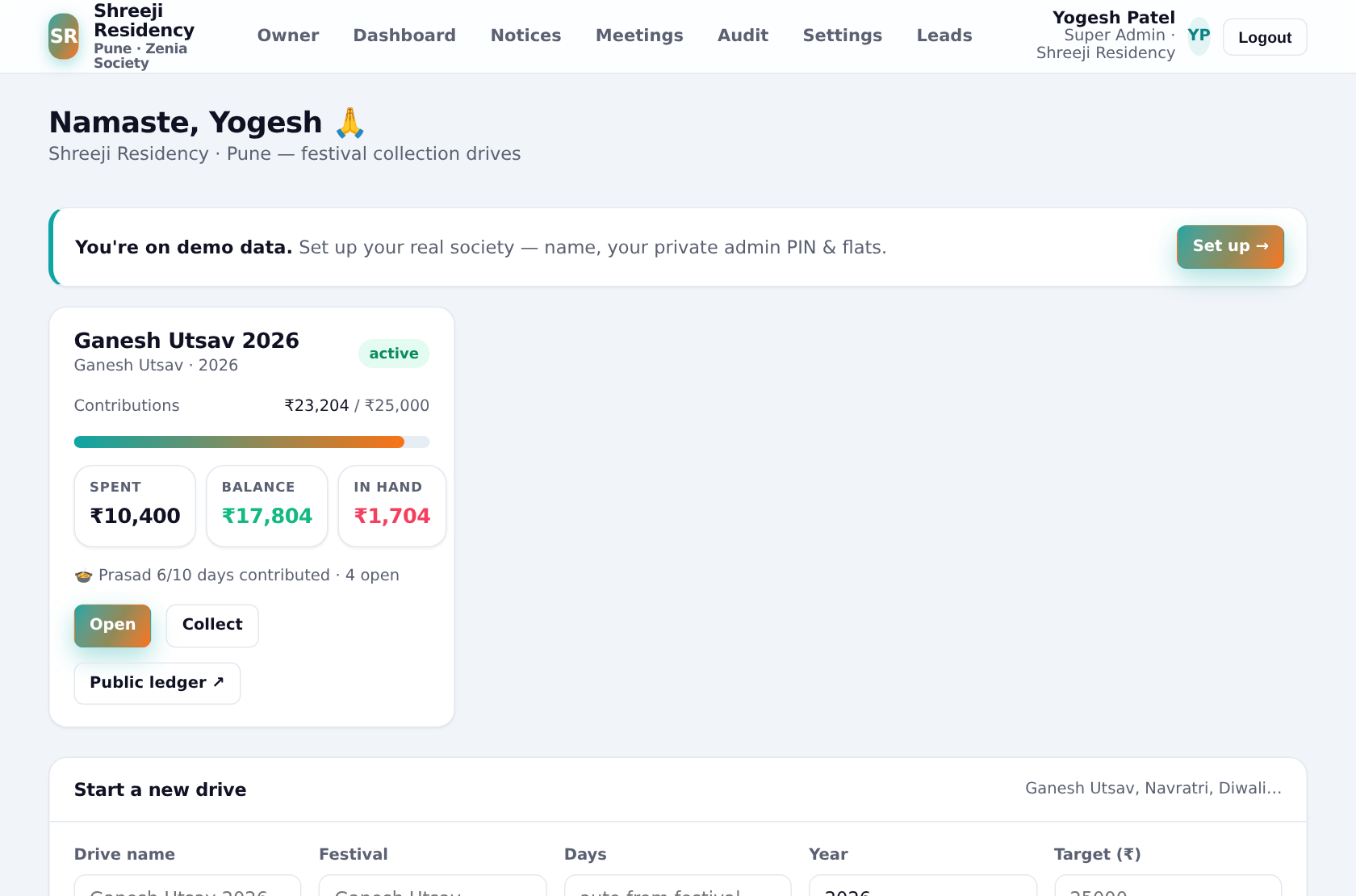
Where Zenia fits
Frequently asked questions
Should the defaulter list be public to residents?
Most societies do better sharing aggregate progress ("142 of 156 flats collected") publicly while volunteers see flat-level detail. Zenia's grid is for the collection team; the public ledger shows collections made rather than a shame list.
How do we handle genuinely stuck dues?
Keep them visible and factual — amounts, dates, notes — and separate the record from the relationship. When escalation (notice, committee decision) is needed, the clean trail is what makes it defensible.
Does part-payment reset the reminder cycle?
A part-paid flat shows exactly what was paid and when; it stays on the follow-up view for the balance, with the note explaining the arrangement. Nothing resets silently.
Keep reading
Or explore the festival directory — the deep guides behind India's celebrations.